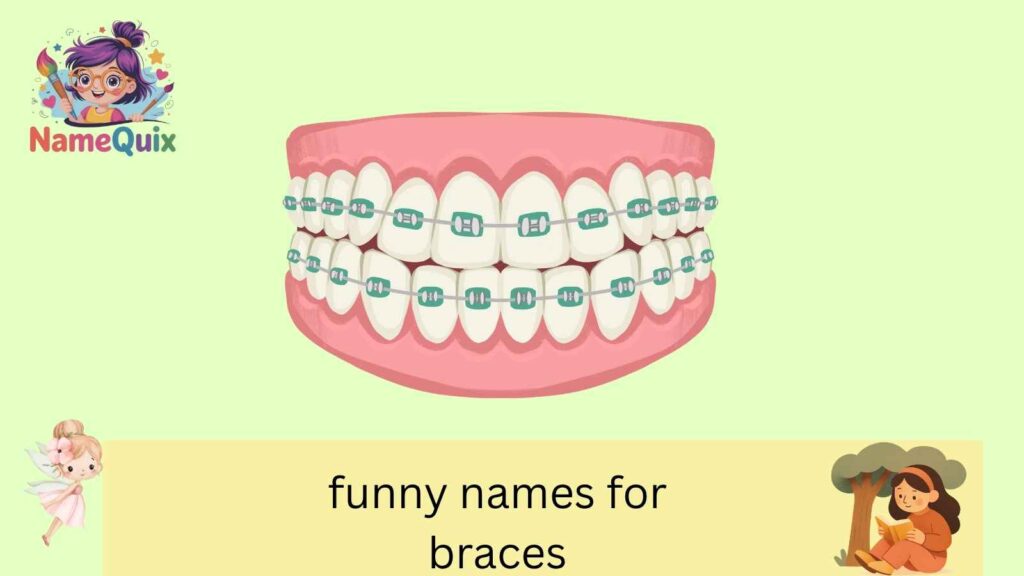
Funny names for braces are more than casual school jokes—they are a reflection of how people socialize around visible dental treatment, especially during teenage years.
When someone gets braces, it often becomes a shared topic among friends, classmates, and even online communities.
Instead of using clinical terms like “orthodontic appliance,” people naturally invent playful nicknames that make the experience less intimidating and more relatable.
The intent behind searching for funny braces names usually falls into three categories: entertainment, social bonding, and content creation.
Some people want to laugh and share jokes, others are looking for creative captions for social media, and many are simply curious about how language evolves around everyday objects.
This article explores the full landscape of braces nicknames—from classic schoolyard humor to modern internet-driven trends.
You’ll also learn why certain names stick, how humor shapes perception of orthodontic treatment, and what makes some terms spread faster than others.
By the end, you’ll have a deep, structured understanding of how “funny names for braces” became a mini cultural phenomenon.
Instant Answer Block (Snippet Ready)
Funny names for braces are playful slang terms people use to describe orthodontic braces. These nicknames—like “metal mouth,” “train tracks,” or “brace face”—add humor to dental treatment and help reduce embarrassment, especially among teens and online communities.
1. Why People Create Funny Names for Braces
Humans naturally rename things that feel uncomfortable, unfamiliar, or socially noticeable. Braces fall perfectly into this category because they are visible, sometimes awkward in early stages, and associated with adolescence.
There are three psychological reasons behind this naming habit:
- Social bonding: Shared jokes create group identity among classmates.
- Emotional coping: Humor reduces anxiety about appearance changes.
- Attention labeling: Anything visually distinct tends to get nicknames.
In school environments, braces become an easy target for harmless teasing. However, over time, these names evolve into affectionate or neutral slang. Even adults sometimes use them nostalgically when remembering their orthodontic years.
Interestingly, naming also acts as a form of normalization. Once something has a funny name, it feels less medical and more everyday. That shift in perception is why braces nicknames spread so widely across cultures.
2. Classic Funny Names for Braces Everyone Knows
Some braces nicknames have stood the test of time. They are simple, visual, and easy to remember.
Common classic names include:
- Metal mouth
- Train tracks
- Brace face
- Hardware smile
- Jail bars for teeth
- Iron grin
- Tooth tracks
- Metal grill (informal slang usage)
These names typically come from visual comparison. For example, “train tracks” refers to the alignment wires, while “metal mouth” emphasizes the metallic structure.
Despite sounding teasing at first, many of these names have become normalized in pop culture. Teen movies, sitcoms, and school stories have reinforced them over decades.
Some of these terms are also regionally adapted. In certain places, “brace face” is more common, while elsewhere “metal mouth” dominates everyday speech.
3. Pop Culture Inspired Braces Names
Pop culture has a massive influence on how braces are described. Movies, TV shows, and social media trends often introduce or popularize nicknames.
Examples of pop-culture-style braces names:
- Cyber smile
- Robot teeth
- Titanium grin
- Star-wire smile
- Glow-up grills
- Metal chic smile
These names often reflect futuristic or aesthetic interpretations. Instead of mocking, they sometimes celebrate braces as part of a transformation journey.
In modern TikTok and Instagram culture, braces are frequently shown as part of a “glow-up” story. That has shifted naming from negative teasing to empowering humor.
Characters in teen dramas wearing braces also reinforce certain stereotypes, which then turn into viral naming trends online.
4. School Life and Teen Humor Around Braces
School environments are the primary source of braces nicknames. Teenagers are highly observant, socially reactive, and quick to create group humor.
In classrooms, braces often become:
- A topic of friendly teasing
- A way to break social ice
- A marker of shared experience among peers
Some school-based humorous names include:
- Locker smile
- Homework hardware
- Detention grin
- Cafeteria wires
- Hall pass smile
These names usually don’t have deep meaning—they evolve spontaneously in peer groups. Once a name gets repeated enough, it sticks.
An important observation is that teen humor is rarely malicious in this context. Instead, it works as a social equalizer. Many students who initially receive nicknames eventually adopt or even joke about them themselves.
5. Creative Wordplay and Pun-Based Braces Names
Wordplay is one of the most powerful sources of funny braces names. Puns make names memorable and shareable.
Examples include:
- Brace yourself (classic pun phrase)
- Smile upgrade system
- Wire wonder smile
- Straight-up grin
- Bite alignment kit
- Tooth tuner
Pun-based names often spread quickly online because they are clever and compact. They also work well in captions, memes, and short-form content.
Social media creators especially prefer pun names because they increase engagement. A clever phrase can turn a simple orthodontic photo into a viral post.
The creativity here comes from combining dental terms with everyday language, transforming technical concepts into relatable humor.
6. Cultural and Regional Variations in Braces Nicknames
Different regions and cultures develop their own versions of braces humor. While the idea remains the same, the language changes based on local slang.
Examples of variation styles:
- English-speaking regions: “metal mouth,” “brace face”
- Urban slang communities: “grill upgrade,” “wired smile”
- Online global slang: “glow-up braces,” “AI smile upgrade”
- School slang variations: often improvised and temporary
Cultural context matters because humor depends heavily on language familiarity. A name that sounds funny in one country may sound neutral in another.
In some cultures, braces are also associated with wealth or medical care quality, which can influence whether the nickname is teasing or aspirational.
7. How Dental Professionals View Braces Nicknames
Orthodontic professionals generally understand that funny names for braces are part of normal social behavior. In fact, many practitioners use light humor themselves to make patients comfortable.
From a professional perspective:
- Nicknames reduce fear of treatment
- Humor improves patient compliance
- Positive framing increases satisfaction
However, experts also caution against harmful teasing. While most names are harmless, repeated negative labeling can affect self-confidence, especially in younger patients.
Modern orthodontic clinics often counter this by rebranding braces as part of a “smile transformation journey,” shifting language toward positivity.
8. Funny Braces Names Based on Personality Types
Not all braces humor is one-size-fits-all. Some names are created based on personality traits or social identity.
Examples include:
For confident personalities:
- Power grin system
- Alpha smile frame
*For shy individuals:
- Quiet wire smile
- Soft upgrade grin
For sporty personalities:
- Athlete brace boost
- Victory bite aligner
For artistic personalities:
- Creative metal smile
- Sketch-line grin
This personalization makes humor more relatable and less generic. It also reflects how people use language to connect identity with appearance.
9. Social Psychology Behind Why These Names Stick
Certain braces names become popular while others disappear quickly. This is not random—it follows predictable psychological patterns.
Names stick when they have:
- Visual similarity (easy mental image)
- Short structure (easy to repeat)
- Emotional trigger (funny or slightly exaggerated)
- Social reinforcement (group usage)
For example, “metal mouth” survives because it instantly creates a visual picture. Meanwhile, overly complex names fade quickly.
Another factor is repetition in media. Once a nickname appears in movies, memes, or viral posts, it gains long-term staying power.
10. Common Misconceptions About Braces Humor
There are several misunderstandings about funny braces names:
Misconception 1: All nicknames are offensive
Not true. Many are affectionate or neutral.
*Misconception 2: Only teens use them
Adults also use nostalgic or humorous versions.
Misconception 3: They harm confidence automatically
Impact depends on context and delivery, not the name itself.
Misconception 4: Orthodontists dislike them
Most professionals accept them as harmless social behavior.
Understanding these misconceptions helps separate harmless humor from actual negative teasing.
11. Why Braces Humor Will Continue in the Future
Braces are not disappearing from culture anytime soon, and neither is humor around them. As orthodontic technology evolves (clear aligners, digital smile planning), new types of jokes and nicknames are emerging.
Future trends may include:
- Tech-inspired smile names
- AI-generated grin upgrades
- Invisible brace humor (“ghost smile”)
- Digital alignment jokes
Language evolves with technology, so braces humor will continue adapting rather than fading.
FAQs:
1. What is the most common funny name for braces?
“Metal mouth” and “brace face” are among the most widely used terms.
2. Are funny braces names considered rude?
Not always. It depends on tone and context. Many are harmless jokes.
3. Why do people name braces at all?
Because humor helps people adjust socially and emotionally to visible changes.
4. Do adults use braces nicknames too?
Yes, especially in nostalgic or joking conversations.
5. Can braces nicknames affect confidence?
They can, but mostly only if used repeatedly in a negative way.
6. What are modern braces nicknames?
Modern names include “glow-up smile,” “cyber grin,” and “smile upgrade.”
7. Are braces jokes popular on social media?
Yes, especially in transformation videos and meme content.
8. What makes a braces nickname go viral?
Short structure, humor, relatability, and strong visual imagery.
Conclusion:
Funny names for braces are more than casual jokes—they are a reflection of how people process visible change through humor.
From classic terms like “metal mouth” to modern “glow-up smile” trends, these nicknames show how language adapts across generations, cultures, and digital platforms.
While some names started as schoolyard humor, many have evolved into playful identity markers that reduce anxiety and even celebrate transformation.
Ultimately, braces nicknames reveal something deeper about human behavior: we make things easier to accept by giving them a story—and sometimes, a funny name.

I am Alex Carter, the creator of Namequix, delivering simple, clear, and helpful content designed for everyone to easily understand and enjoy online.